Wooden utensils are useful in everyday cooking. Wooden spoons, spatulas, and ladles are gentle on cookware and comfortable to hold. However, here we learn about how to clean wooden utensils and why they need a little more care than stainless steel or silicone utensils. Wood is a natural, porous material, which means it can absorb water, food particles, grease, and cooking smells. If wooden utensils are not cleaned and dried properly, they may develop unpleasant odors, stains, or cracks over time.
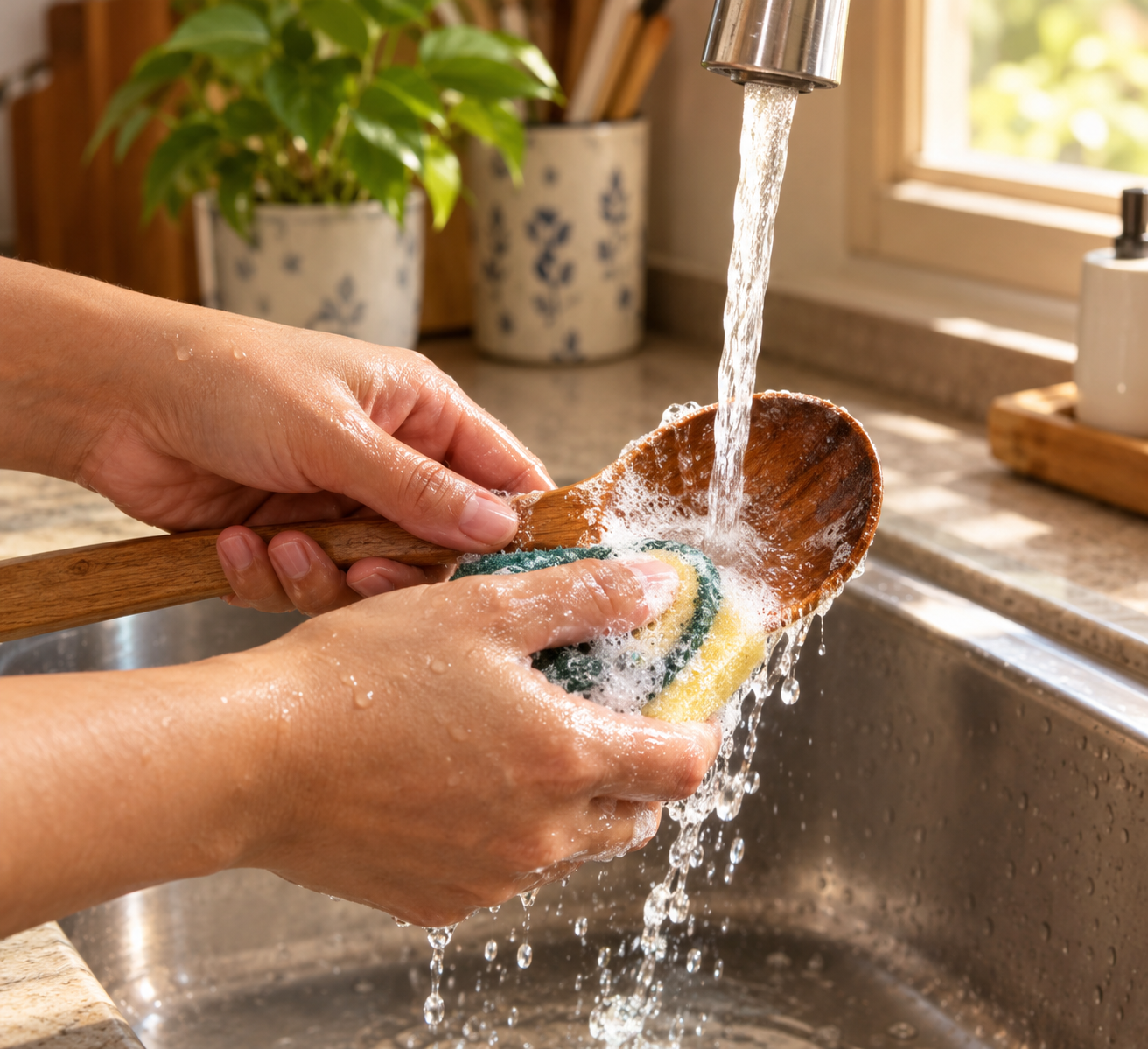
Cleaning wooden utensils is not difficult. After each use, wash them by hand with warm water, a small amount of mild dish soap, and a soft sponge. Gently scrub away food residue, rinse thoroughly, and wipe off excess water with a clean towel.
Finally, leave them to air-dry completely in a well-ventilated place before storing them. Avoid leaving wooden spoons in the sink or soaking them in water for long periods. Too much moisture can cause the wood to swell, weaken, or crack. It is also better to avoid putting wooden utensils in the dishwasher because high heat and prolonged exposure to water can damage the wood. With regular cleaning and proper drying, wooden utensils can stay clean, smooth, and useful for a long time.
A little extra attention after cooking can help prevent stains, smells, and damage. In the next steps we can know about how to clean wooden utensils
Why wooden utensils need special care
Wood is a porous material. It absorbs water, oils, and food and so is prone to swelling, warping, cracking, staining, and holding odors if mistreated. The secret to keeping it in good shape is to clean it gently and dry it completely.
What You Need to know about How to Clean Wooden Utensils
How to clean wooden utensils every day
How to clean wooden utensils 3 methods
Here are the three ways how to clean wooden utensils
for We repeat every few weeks or when utensils look dull or smell off. with
Vinegar method: Combine equal parts white vinegar and water. Wipe or briefly wet the utensils with the solution, wash with clean water and dry completely.
Lemon & Salt Method: Rub half a lemon over the surface and sprinkle with coarse salt. Leave for a few minutes before rinsing and drying.
Hydrogen peroxide method: Wipe with 3% hydrogen peroxide. Let it stand for a short time. Rinse and dry. This is useful if you want a more powerful sanitizing step.
How to remove stains from wooden utensils
Turmeric, tomato sauce and coffee leave stains.
Make a paste by mixing some baking soda with a little water.
Gently rub the stain with a soft cloth or sponge.
Let rest for 10 to 15 minutes.
Rinse, dry and repeat as necessary.
You can also put the utensils in direct sunlight for a short while to help fade stains but don’t leave them out as the sun can dry out and crack the wood.
How to Remove Smells from wooden utensils
Garlic, onion, and fish odors can linger.
How we can condition wooden utensils
Cleaning can dry out the wood. Conditioning restores it and helps prevent cracks.
Do this about once a month, or whenever the wood looks dry or pale. Avoid cooking oils like olive or vegetable oil, which can turn rancid over time.
What NOT to do When Cleaning
When to replace wooden utensils
Different Types of Wooden Utensils
How to clean wooden utensils of different types
How to clean different types of wooden utensilsThe basic rules stay the same, but each type has small differences.Wooden spoons and spatulas: Pay attention to the bowl and the edges, where food collects. Scrub gently with a soft sponge, then dry the handle and the head.Wooden forks and eating cutlery: Use a soft brush to clean between the tines, and rinse right after eating so food does not harden.Bamboo utensils: Bamboo is a grass and resists water a little better than most woods, but it still needs hand washing and full drying.Wooden chopsticks: Wash soon after use and dry them upright so water does not pool at the tips.Finished or lacquered utensils: Check the label. Varnished pieces should not be oiled, and soaking can damage the coating.Type your paragraph here
Frequently Asked Questions About How to Clean Wooden Utensils
How to clean wooden spoons with boiling water
Boiling water can help loosen food residue and remove some odors from wooden spoons. Pour hot water into a bowl and soak the spoon briefly, for about 1–2 minutes. Scrub it with a soft sponge and mild dish soap. Rinse with clean water and dry immediately. Avoid prolonged soaking.
How to clean wooden spoons with mold
If you notice mold on wooden spoons, wash them with warm water and dish soap. Scrub the affected area with a brush. However, mold can grow deep inside porous wood. If the mold is widespread, deeply embedded, or leaves a musty smell, discard the spoon instead of reusing it.
How to clean wooden spoons with vinegar and baking soda
To clean wooden spoons with vinegar and baking soda, sprinkle a little baking soda over the surface and gently scrub with a damp sponge. You can use diluted white vinegar separately to help remove odors. Rinse thoroughly with clean water and dry immediately. Avoid prolonged exposure to moisture.
How to clean wooden spoons with boiling water vinegar
Mix equal parts white vinegar and water in a bowl. Heat the mixture until hot, but avoid boiling it with the wooden spoon inside. Wipe the spoon with a cloth dipped in the solution. Rinse with clean water and dry immediately. Never soak wooden utensils for a long time.
How to clean wooden utensils stains
To remove stains from wooden utensils, sprinkle baking soda over the stained area and gently scrub with a damp sponge. You can also rub half a lemon over light stains. Rinse the utensil with clean water and dry it completely. For stubborn or deep stains, replace the utensil if necessary.
How to clean wooden spoons for the first time
Before using a new wooden spoon, wash it with warm water and mild dish soap. Gently scrub the entire surface with a soft sponge and rinse thoroughly. Dry it with a clean towel and allow it to air-dry completely. Apply a thin layer of food-grade mineral oil if needed.
How to deep clean wooden spoons
To deep clean wooden spoons, wash them with warm water and mild dish soap. Gently scrub away food residue using a soft brush. Rinse thoroughly and dry immediately with a clean towel. Allow the spoons to air-dry completely before storing them. Avoid dishwashers and prolonged soaking to prevent cracking.
How do you remove stains from wooden spoons?
You can remove light stains from wooden spoons using baking soda or lemon juice. Sprinkle baking soda on the stained area and gently scrub with a damp sponge. For another option, rub half a lemon over the stain. Rinse thoroughly and let the spoon dry completely before storing it.
What oil is safe for wooden cooking utensils?
Food-grade mineral oil is one of the safest choices for wooden cooking utensils. It helps prevent the wood from drying out and cracking. You can also use a food-grade beeswax and mineral oil conditioner. Avoid ordinary cooking oils, such as olive oil, because they can become rancid over time
How often should wooden spoons be oiled?
Oil your wooden spoons whenever they start looking dry, rough, or faded. For frequently used utensils, applying food-grade mineral oil once every month is a reasonable starting point. Wash and dry the spoons before applying a thin layer of oil. Allow the oil to absorb before using them again.
hi